


About the Author:
CEO at AlFiPa, responsible for operations as well as purchasing and sales. He is the primary contact for orders and deliveries within the company.
What are vapor barriers and vapor retarders?
Vapor barriers prevent and vapor retarders reduce the penetration of moisture, helping protect against condensation, mold, and corrosion. This is important not only for roofing, piping, and packaging, but also for many other applications. Our films provide the protection you need—whether moisture-inhibiting, heat-reflective, or corrosion-resistant.
Differences between vapor barriers and vapor retarders
A vapor barrier differs from a vapor retarder in its diffusion resistance. The key parameter is the Sd-value, expressed in meters.
It stands for the “water vapor diffusion-equivalent air layer thickness” and describes the water vapor permeability of a building layer or construction material (e.g., a vapor retarder or vapor barrier).
The Sd-value is calculated using the material-specific water vapor diffusion resistance factor (μ) multiplied by the thickness of the material (s) in meters: sd = μ · s
The rule is: the higher the Sd-value, the less water vapor the material allows to pass through.
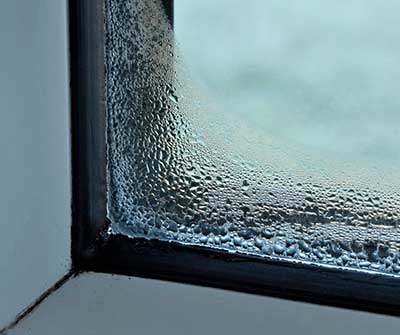
Vapor barriers and vapor retarders protect buildings and installations from condensation, mold, and corrosion.
DIN 4108-3 defines the following classifications:
Based on the Sd-value, the diffusion behavior of exterior components and sealing materials can be assessed:
- Vapor-open: sd ≤ 0.5 m
- Vapor-retardant / vapor retarder: 0.5 m < sd < 1,500 m
- Vapor-tight / vapor barrier: sd ≥ 1,500 m
(Film) materials and methods
Vapor barriers prevent moisture exchange between different building components, while vapor retarders reduce this exchange. Depending on the application, different materials are used.
Vapor barriers
For a complete vapor barrier, true metal foils—usually aluminum foils—are predominantly used, as they are virtually impermeable to water vapor (sd ≥ 1,500 m) and provide optimal moisture protection. The foil is laid in overlapping sheets and fully bonded to create a continuous airtight and vapor-tight barrier layer.
Where the vapor barrier is installed depends on the type of insulation. In a full roof renovation, insulation is typically installed directly on the rafters. In this case, the vapor barrier foil is laid above the rafters—either directly on them or mounted on a solid sheathing. If the insulation is placed between the rafters, the foil is installed on the room side below the rafters.
Vapor retarders
Vapor retarder foils are primarily made from metallized plastic films, such as metallized PET (PET met) or metallized PP (PP met).
The thickness of the metallization is crucial for vapor permeability: the thicker the vacuum-deposited aluminum layer, the less water vapor can pass through the foil.
Microperforations or specific material structures allow controlled diffusion, enabling limited drying-back of building components.
Vapor retarders are mainly used in roof insulation. The foil is installed between gypsum board or OSB panels and the insulation between rafters. Highly moisture-variable foils are often used here, improving the structural protection of roof constructions with a vapor-open exterior layer.
Application areas for vapor barriers and moisture protection films
Vapor barriers, condensation protection, and corrosion protection are used in numerous application areas to protect building structures, technical systems, or metal constructions from moisture and related damage.
Building & construction technology
- The foil protects insulation materials long-term against moisture and condensation.
- Vapor barrier foils for roofs, interior walls, and floors—prevent indoor moisture from penetrating.
- Condensation protection foils are ideal for renovations as well as wall and ceiling areas.
Industrial plant engineering
- In industrial environments, foils protect components from corrosion and moisture penetration.
- Vapor barrier foils for tanks, pipelines, and machinery insulation.
- Aluminum foils with barrier layers combine thermal and moisture protection.
- Corrosion protection foils provide a barrier effect in humid environments.
Refrigeration & HVAC (heating, ventilation, and air conditioning)
- Efficient protection against condensation and energy losses in cooling and air-conditioning systems.
- Anti-condensation foils for refrigeration lines and air ducts.
- Vapor barrier foils prevent warm air from entering insulation layers.
- Insulation foils improve the performance of air-conditioning systems.
Packaging & logistics
- Technical foils protect sensitive goods during transport and storage.
- Packaging foils with vapor barriers—ideal for machinery and electronics.
- VCI or aluminum corrosion protection foils provide long-lasting rust protection.
- Moisture protection foils for spare parts and long-term storage.
Shipbuilding & offshore
- Salt spray and high humidity require robust foil solutions.
- Vapor barrier foils protect technical rooms and insulation.
- Anti-condensation foils prevent moisture buildup in ceiling structures.
- Aluminum foils offer effective protection against corrosion from sea air.
Energy technology
- Moisture protection for storage units, modules, and control cabinets.
- Vapor barrier foils for insulation in technical and outdoor installations.
- Anti-condensation foils prevent moisture buildup in PV and energy storage components.
- Aluminum foils combine moisture and temperature protection.
Automotive industry
- Foils contribute to the durability and functionality of vehicle components.
- Vapor barrier foils for insulation mats, doors, and interiors.
- Corrosion protection foils for packaging automotive components.
- Insulation foils for HVAC systems and cable routing.
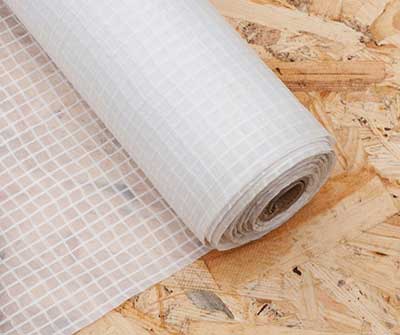
Vapor barriers and vapor retarders protect buildings and installations from condensation, mold, and corrosion.
Components are not hermetically sealed by vapor barriers and vapor retarders. However, when installed airtight, they prevent moisture transport to different degrees through diffusion and convection.
Functions of vapor barriers and vapor retarders
The following table provides an overview of the properties and functions of vapor barriers and vapor retarders:
| Property | Vapor barrier | Vapor retarder |
|---|---|---|
| Diffusion behavior | Strongly restricts diffusion and prevents water vapor from entering insulation layers to avoid moisture buildup, heat loss, water damage, and mold | Reduces the amount of water vapor penetration, protecting against excessive moisture and mold growth |
| Water vapor permeability | No permeability to water vapor; moisture remains in the room. | Limited permeability in both directions, allowing moisture to dry out |
| Moisture adaptation | Complete blockage of water vapor; no adaptation to humidity changes | Some vapor retarders (e.g., polyamide-based) are adaptive: under high humidity, resistance increases to protect building components |
| Convection | Prevents convection through airtight installation and protects against unwanted airflows | Allows partial airflow if joints form, due to temperature and pressure differences between indoor and outdoor climates |
Standards and quality
We can ensure that we supply film solutions in accordance with the relevant technical regulations and requirements—not only for industry and construction, but also for export packaging. If you have questions regarding the standards to be met, our team is happy to support you at any time.
Relevant product standards and guidelines in manufacturing:
- DIN EN 13984 – European product standard for plastic membranes used as vapor barriers and vapor retarders; relevant for Sd-value, waterproofing, tear and tensile strength, and fire behavior (in accordance with EN 13501-1).
- DIN 4102 / EN 13501 – National and European standards for classifying fire behavior; relevant for classification as “flame-retardant” (B1) or meeting international safety requirements.
- TL 8135-0019 / DIN 55530 – Technical delivery conditions and DIN standards for corrosion protection and export packaging foils with defined low water vapor permeability.
- VCI standards (e.g., TL 8135-0043) – Guidelines for using volatile corrosion inhibitors in active protective films for metal packaging.
- REACH compliance in accordance with Regulation (EC) No. 1907/2006 – no use of substances of very high concern (SVHC).
Installation and processing
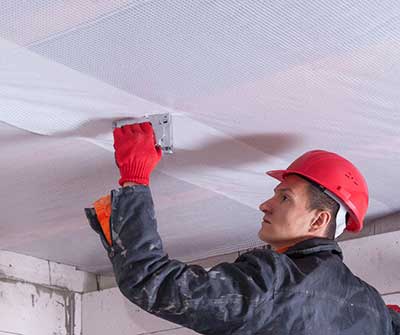
Vapor barriers and vapor retarders protect buildings and installations from condensation, mold, and corrosion.
In addition to material selection, proper installation also determines the effectiveness of vapor barriers and vapor retarders.
To work reliably, vapor barriers and vapor retarders must be installed airtight and with overlapping seams. Leaks or open joints allow warm, humid indoor air to enter the insulation layer and condense there.
What happens if there are leaks or the wrong material is chosen?
Installation errors or incorrect foil selection can have serious consequences:
- Condensation: Warm, humid air enters cold insulation areas through leaks and condenses there
- Mold growth: Permanently damp building components provide ideal conditions for mold, reducing indoor air quality
- Material damage: Insulation loses thermal performance; wooden components may rot or corrode
- Corrosion: In metal components or systems, condensate leads to rust and increased maintenance requirements
Are you looking for condensation protection films suitable for your project? We are one of Europe’s leading suppliers of films, with over 40 years of expertise at AlFiPa. Get in touch now for expert advice!