

About the Author:
CEO at AlFiPa, responsible for operations as well as purchasing and sales. He is the primary contact for orders and deliveries within the company.
Types of Moisture Exposure
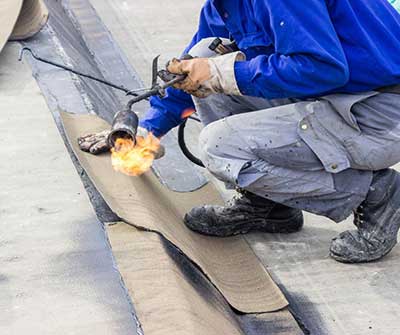
Sealing films provide reliable protection against moisture
In construction, different forms of moisture occur. Rainwater and splashing water primarily affect facades and roofs and pose external stress. Ground moisture and capillary rising damp, on the other hand, endanger foundations, basements, and pipelines.
Condensation in technical systems, such as ventilation units or cold insulation, can also cause significant damage if not protected by appropriate barrier layers.
Depending on the type of exposure – rain, splash water, or ground moisture, different types of sealing films are required.
Materials & Functionality of Sealing Films
Modern sealing films are made from high-quality materials tailored to their specific area of use.
| Film Type | Description | Properties | Applications |
|---|---|---|---|
| HDPE Film (High-Density Polyethylene) | Plastic film made of high-density polyethylene, designed for foundation and basement sealing |
|
|
| Bitumen-Modified Composite Film | Combination of plastic-modified bitumen and flexible HDPE film, fully cold self-adhesive |
|
|
| Dimpled Membrane | Structured film with a dimpled surface, creates drainage between wall and ground |
|
|
HDPE film is preferred when high chemical exposure or strong moisture impact is expected, such as in foundation areas.
Bitumen-modified composite film is particularly suitable for construction sections with varying moisture zones, as it provides a flexible, self-adhesive seal.
Dimpled membrane is used when both drainage and mechanical protection of the wall surface are required.
Sealing films act as a moisture barrier and contribute to the building’s thermal efficiency. The correct choice of film depends on the stress class, installation location, and DIN requirements.
Standards and Requirements
Some key DIN standards in the field of moisture protection are DIN 13967, DIN 13984, and DIN 18533.
DIN 13967 – This standard defines the properties and specifications of plastic and elastomer membranes used for building waterproofing against ground moisture and water.
DIN 13984 -This standard provides definitions and properties of sealing membranes made from plastics and elastomers as vapor barriers, primarily used for building waterproofing. It applies to products with and without reinforcement layers. It includes specifications for requirements, testing methods, and conformity assessment of products in accordance with the standard.
DIN 18533 – This standard applies to the planning, selection, and application of waterproofing systems for components in contact with soil using sheet or liquid-applied sealing materials.
Together, these standards form the foundation for the professional planning and evaluation of waterproofing systems in construction. They serve as a binding benchmark for manufacturers, planners, and contractors to ensure durable and standards-compliant sealing solutions.
We supply exactly the right films you need, tailored to your requirements and fully compliant with the relevant standards.
Applications
Sealing films are used in a wide range of areas:
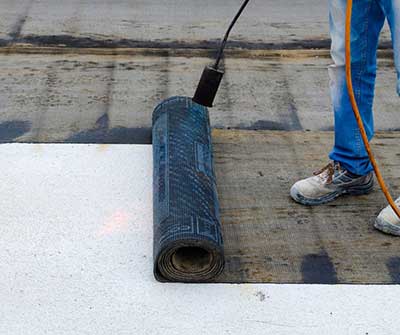
Sealing films provide reliable protection against moisture
Construction Industry
Sealing of roofs, exterior walls, floor slabs, and foundations.
HDPE films are primarily used in ground-contact areas with high chemical or mechanical stress, while bitumen-modified composite films offer secure, self-adhesive sealing for facades, thresholds, and transitions. Dimpled membranes also serve as protective and drainage layers on basement walls.
Technical Insulation
Protective layer in air ducts, pipelines, or insulation mats.
Here, HDPE or aluminum composite films prevent condensation and corrosion, especially in refrigeration and air-conditioning systems as well as industrial installations.
Interiors
As a vapor barrier beneath screeds or in damp rooms, sealing films protect building structures from rising water vapor and mold formation. Depending on the structure, they can also improve thermal reflection and energy efficiency.
Depending on their material composition, sealing films can also be combined with thermal protection and reflective properties, further enhancing their energy efficiency.
Advantages of Sealing Films
Effective moisture protection significantly extends the lifespan of buildings and installations.
Modern sealing films combine sealing, thermal reflection, and mechanical stability in a single system.
Sealing films prevent corrosion, mold, and structural damage, are resistant to chemicals and weather, and are easy to install.
HDPE and bitumen composite films in particular offer a sustainable, versatile solution.
They combine sealing, thermal reflection, and mechanical stability, thereby contributing to energy efficiency and the preservation of modern buildings.
FAQ
What is the difference between a sealing film and a moisture barrier?
Sealing films actively prevent the penetration of water or moisture into components, while moisture barriers mainly block the upward movement of ground moisture.What role does DIN 18533 play in the selection of sealing films?
DIN 18533 defines the requirements and stress classes for the sealing of components in contact with soil. It specifies which film and sealing systems are permissible for certain types of moisture exposure.Can I request custom sizes and dimensions?
Yes, we offer both roll stock and custom-cut pieces in standard and special sizes!
What sizes of film are available?
From standard widths to custom fabrication, we deliver precisely to your needs, from rolls to pre-cut pieces. Just ask us.
Are you looking for insulation films that provide professional-grade moisture sealing? We are one of Europe’s leading suppliers of films, with over 40 years of expertise at AlFiPa.Get in touch now for expert advice!